

Vertiv Holdings, the global giant that builds the power and cooling infrastructure inside data centers, agreed September 2 to buy a Raleigh company most people have never heard of: Utility Innovation Holdings, known as UtilityInnovation Group, or UIG. The price is about $1.45 billion in cash, and up to $2.6 billion if UIG delivers.
The base price works out to roughly 13 times the company's expected 2027 earnings. If UIG hits profit targets at 12 and 24 months, the price climbs toward $2.6 billion. That "up to" matters more than it looks. Some coverage has already called this a $2.6 billion deal. It isn't, yet. It's a $1.45 billion deal with a $1.15 billion bonus for performance, and the difference between those two numbers is the whole story.
The merger agreement was signed September 1. Closing is targeted for the fourth quarter, pending federal antitrust review. Vertiv says it will fund the purchase from existing resources. No debt stack, no financing cliff, no asterisk about raising the money.
The company behind the deal
UtilityInnovation Group builds the systems that keep data centers alive when the grid isn't enough. If the word "microgrid" has never meant anything to you, this is the company that changes that.
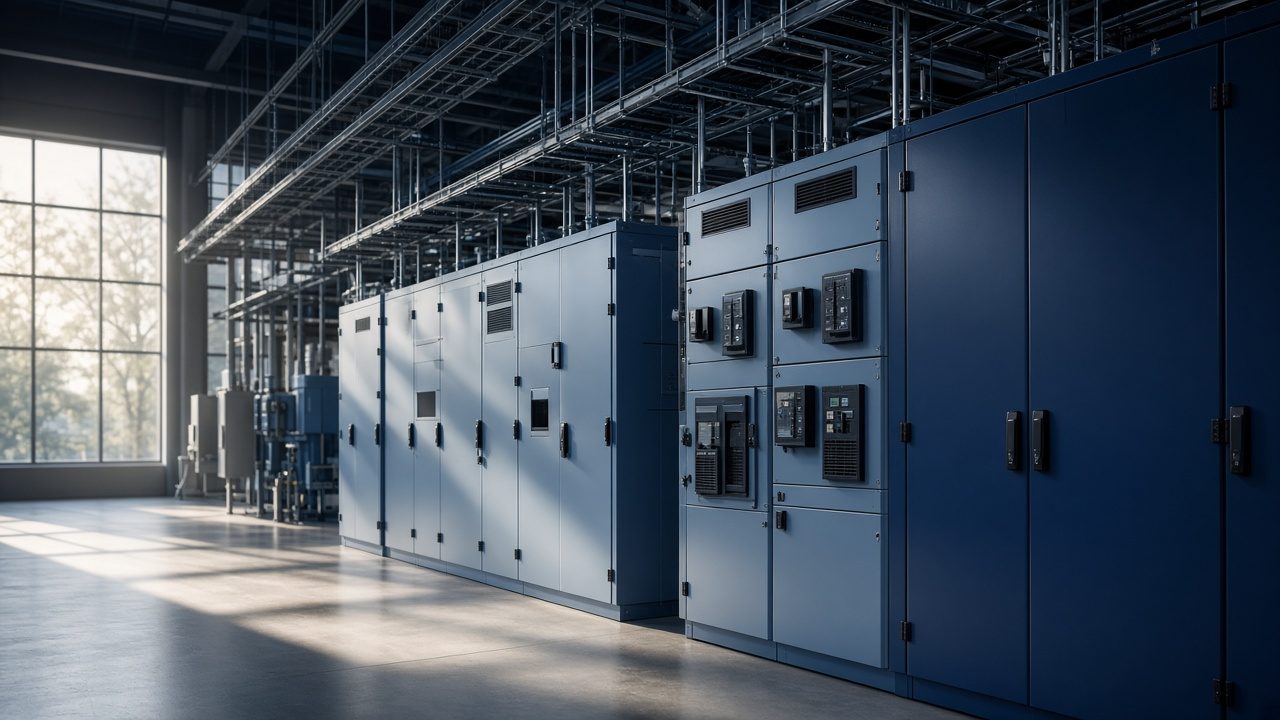
A microgrid is a small power network that can run on its own. A data center with microgrid controls can ride through a utility outage, manage its own on-site generation, store power, and keep the lights on when the grid around it can't. UIG's specialty is making that work at industrial scale: microgrid controls, on-site generation and storage orchestration, switchgear, and the behind-the-meter architecture that sits between the utility connection and the building's electrical spine.
That's a narrow lane, but it's the right lane at the right moment. Data centers are the most power-hungry buildings ever constructed, and the people building them have found out that the grid, and the utilities that run it, weren't built for the pace they move at.
UIG's headquarters sits at 702 Oberlin Road in Raleigh, a modest address for a company that just got bought for nine figures. It manufactures in North Carolina and New Jersey, and runs a European headquarters out of Dublin. The founding date is soft-conflicted in the sources. Company materials say 2020. Some directories say 2021. The detail only matters for what it implies: a firm that may not be five years old sold for $1.45 billion in cash.
Why the money is there
Vertiv's CEO, Gio Albertazzi, put it plainly in the announcement:
"For AI data center operators, competitive advantage increasingly depends on how quickly they can move from site selection to first token."
First token. Not first rack. Not first megawatt. First token, meaning the first output from the AI system. That phrase is doing more work than any earnings slide right now, because it names the race the data-center industry is running.
The chips are ready. The models are ready. Power is the shortage. Grid interconnection queues stretch for years in many markets. County boards across North Carolina have spent the last year fighting over data-center moratoriums and secrecy agreements, several of which we've covered. The companies building AI infrastructure have reached the same conclusion from different directions, and more of them are deciding that the fastest path to power is owning the systems between the grid and the building.
Albertazzi again, on what UIG brings:
"With UIG, we anticipate extending that portfolio upstream to the utility interconnect and onsite power sources, creating a coordinated architecture from source to chip without tying customers to a single generation technology or supplier."
Vertiv already owns the infrastructure inside the data center. The cooling. The power distribution. The cabinets. UIG extends that reach backward to the utility interconnect and the on-site generation. One vendor, from the substation to the server. And the "without tying customers to a single generation technology" line is doing real work too. It's the company saying it won't pick winners among solar, gas, storage, or anything else. It'll orchestrate all of them. In a market this uncertain, flexibility is the selling point.
UIG's founder and CEO, Sidney Hinton, said the company was built to solve "increasingly complex power challenges for data center operators through flexible, technology-agnostic architectures," and called Vertiv's global scale and critical-infrastructure portfolio "a strong strategic fit for what we have built."
A founder selling to a giant at that price. It's the outcome every founder in the data-center supply chain is now measuring themselves against.
What the deal documents do not say
The primary deal documents do not lock in North Carolina specifics.
No guaranteed NC headcount. No named plant city. No post-close commitment that UIG's hub stays in Raleigh. No named North Carolina customers. No Duke Energy tie. And the marketing line floating around that UIG serves the "vast majority" of U.S. microgrids? Unverified. We're not repeating it as fact.
Cash acquisitions don't come with public promises about jobs, and nobody should assume a Raleigh company stays a Raleigh company just because its HQ is on the letterhead. Whether the North Carolina operation grows, holds, or consolidates is a question for after the close. It's worth asking out loud now, because this is the second time in recent months that a piece of the state's AI supply chain has been bought by a much larger player.
The state's stake
North Carolina has spent the last year arguing about the end of the AI pipeline. The data centers. The power lines. The moratoriums. The secrecy. This deal is the other end of it. The state isn't just hosting AI infrastructure. It's building the companies that the infrastructure depends on.
The deal also redraws part of the map. Vertiv now owns a Raleigh company with manufacturing in North Carolina. The state is suddenly home to a piece of a global power-and-cooling supply chain, sitting right where the industry's bottleneck is. If AI demand holds, that's leverage. The state stops being a place where data centers get built and starts being a place where the stuff they run on gets built. If the boom cools, UIG becomes a division of a giant, which is a safer place to be than a startup in a cooling market.
Either way, the deal puts a number on something North Carolina has been arguing about in the abstract. How much the AI economy values what this state has.
What to watch
- The antitrust review. A $1.45 billion deal in a concentrated power-and-cooling market will get a look. A clean close by Q4 is the market's expectation.
- The earnouts. They're tied to 12- and 24-month EBITDA targets. If UIG hits them, the real price is $2.6 billion and the company was worth more than anyone guessed. If it misses, the headline number shrinks, and the "up to" becomes the story.
- The jobs question. Watch for the first public statement about Raleigh headcount and North Carolina manufacturing after close. It's the first thing locals will ask and the last thing deal announcements mention.
- The Duke question. A Raleigh power company with exactly the product the state's data-center boom needs, and no named utility tie in the deal documents. The state's dominant utility is about to spend more than a decade trying to serve AI campuses that want what UIG sells. That story isn't in the deal docs. It's the one to follow.
Sources: Vertiv corporate release (Sept. 2, 2026) · Vertiv 8-K (Sept. 2, 2026) · Reuters · Microgrid Knowledge · uig.com. Numbers and quotes verified against primary sources; company-reported figures attributed.
 Chemours Seeks EPA Clearance for an AI Data-Center Coolant. Clean Cape Fear Wants a No.
 WhiteFiber's Madison AI Campus Starts Billing on Nscale's $865 Million Deal